
Demand Generation vs Lead Generation

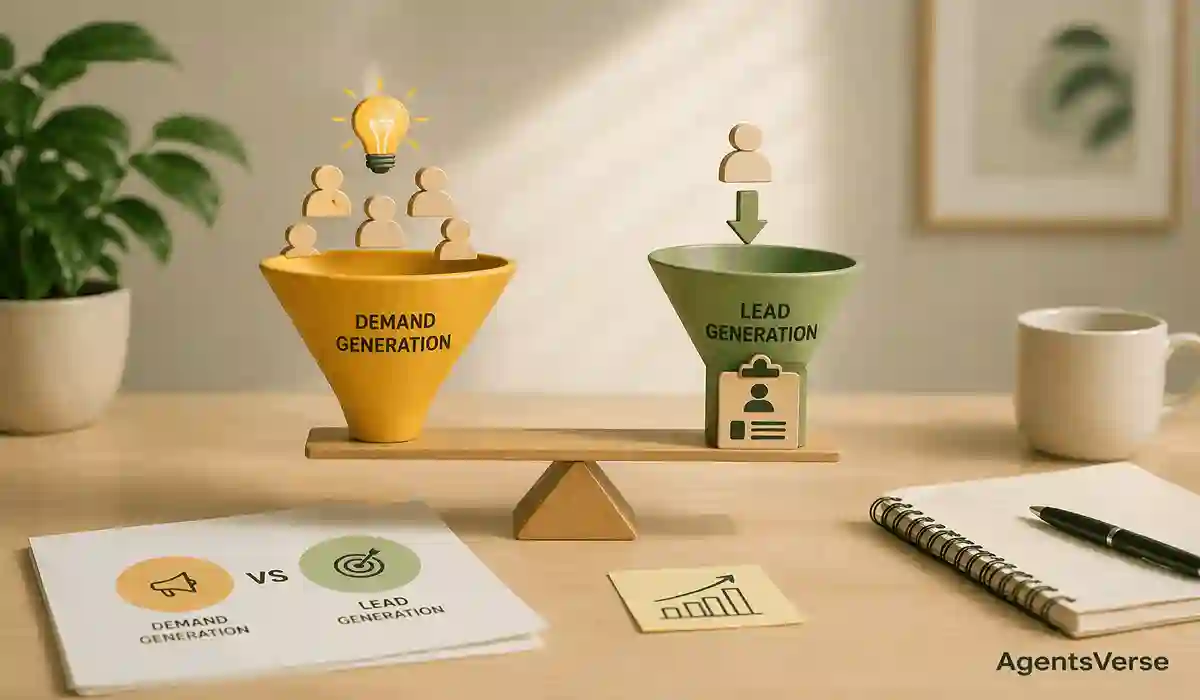
Demand generation vs lead generation is one of the most common topics in marketing today. Many people mix these two ideas, but they are not the same. Both help businesses grow, but they work in different ways and at different stages of the customer journey.
If you want better results from your marketing, you need to understand how they work together. This informative blog will break everything down in a simple way so you can use both strategies the right way.
What Is Demand Generation?
It is the process of creating awareness and interest in your product or service before someone is ready to buy.
It focuses on helping people understand a problem and showing them that a solution exists. You are not trying to sell right away. Instead, you are building trust and educating your audience.
Key Goals of Demand Generation
- 🎯 Build brand awareness.
- 📘 Educate your target audience.
- 🔥 Create interest in your product.
- 👥 Attract the right audience.
Common Demand Generation Activities
- Blog posts and articles.
- Social media content.
- Videos and webinars.
- SEO and organic search.
- Free guides and resources.
Example:
Let’s say someone does not know they need a CRM tool. A helpful blog post or video can show them why managing customer data matters. That is demand generation in B2B and B2C.
What Is Lead Generation?
Lead generation is about capturing contact details from people who are already interested. These people are now ready to take action.
Key Goals of Lead Generation
- 📥 Collect user information.
- 🔄 Convert visitors into leads.
- 📊 Move prospects into the sales funnel.
Common Lead Generation Activities
- Landing pages
- Email sign-up forms
- Free trials
- Demo requests
- Downloadable content (ebooks, checklists).
Example:
After reading your blog, a user signs up for a free demo. That action turns them into a lead. This is lead generation in action.
Demand Generation vs Lead Generation: Key Differences
Understanding the difference between lead generation and demand generation helps you build a stronger strategy.
| Factor | Demand Generation | Lead Generation |
|---|---|---|
| Focus | Demand generation focuses on awareness. | Lead generation focuses on conversion. |
| Timing | Demand generation happens at the early stage. | Lead generation happens when users are ready. |
| Goal | Demand generation builds interest. | Lead generation collects data. |
| Content Style | Demand generation uses educational content. | Lead generation uses action-based content. |
| Metrics | Demand generation tracks engagement and reach. | Lead generation tracks conversions and leads. |
What Is the Difference Between Lead Generation and Demand Generation in Simple Terms?
If you want a simple answer to what the difference is between lead generation and demand generation, think of it like this:
- Demand generation = creating interest.
- Lead generation = capturing interest.
One builds curiosity, the other collects contact details.
Both are important. You cannot skip one and expect results.
Why Demand Generation Comes First
Before someone shares their email, they need to trust you. That trust comes from demand generation.
Why It Matters
- ● People do not buy from brands they don’t know.
- ● Education builds confidence.
- ● Awareness increases conversions later.
Without demand generation, your lead generation efforts may fail.
Why Lead Generation Still Matters
While demand generation builds awareness, you still need leads to grow your business.
Why It Matters
- ● Helps sales teams connect with prospects.
- ● Builds a pipeline of potential customers.
- ● Drives revenue.
So, lead generation vs. demand generation is not about choosing one. It is about using both together.
How Demand Generation and Lead Generation Work Together
The best marketing strategies combine both.
Step-by-Step Flow
- 1. A user reads your blog (Demand generation).
- 2. They follow you on social media (Demand generation).
- 3. They trust your content.
- 4. They download a guide (Lead generation).
- 5. They sign up for a demo (Lead generation).
This is how the full funnel works.
Demand Generation in B2B: Why It’s More Important
In demand generation in B2B, the buying process is longer. People take more time to decide.
Key Reasons
- Multiple decision-makers.
- Higher costs.
- More research is required.
This makes demand generation even more important before lead capture.
Common Mistakes Businesses Make
Many businesses struggle because they misunderstand lead generation vs demand generation.
1. Focusing Only on Leads
They try to collect emails without building trust first.
2. Ignoring Content
Without useful content, demand generation fails.
3. Using Too Many Tools
Teams often use different tools for:
- ● Finding companies.
- ● Getting contacts.
- ● Verifying emails.
- ● Managing outreach.
This slows down the process and creates confusion.
How AgentsVerse Cloud Solves the Problem
This is where modern tools like AgentsVerse Cloud make a big difference.
Instead of using multiple tools, businesses can now do everything in one place.
What Makes AgentsVerse Cloud Different
- ● Works as an AI prospecting tool.
- ● Acts as a complete GTM intelligence platform.
- ● Focuses on just-funded companies' AI agent insights.
Real Problem It Solves
Right now, companies use 5 different tools for outreach:
- ● Finding target companies.
- ● Discovering contacts.
- ● Verifying emails.
- ● Enriching data.
- ● Managing outreach.
With AgentsVerse Cloud, everything is combined.
Key Features
Unique Advantage
- ● 600 just-funded company leads every month.
- ● Leads shared daily (slightly fewer on weekends).
- ● Tracks global funding, not just the US.
- ● HubSpot integration available.
This makes it easier to connect with the right audience at the right time.
How AgentsVerse Cloud Supports Demand and Lead Generation
AgentsVerse Cloud helps with both parts of the funnel.
For Demand Generation
- ✔ Helps identify the right target audience.
- ✔ Provides insights into growing companies.
- ✔ Helps create relevant content.
For Lead Generation
- ✔ Gives verified contact details.
- ✔ Automates outreach.
- ✔ Improves conversion rates.
This makes your lead generation as well as demand generation strategy stronger and more efficient.
Best Practices for Demand Generation
To get better results, follow these simple steps:
1. Create Helpful Content
Focus on solving real problems. Research shows that content plays a key role in building demand. In fact, 83% of marketers say content marketing is the most effective strategy for demand generation.
2. Use Multiple Channels
- Blogs
- Social media
- Email newsletters
3. Be Consistent
Keep showing up with useful content.
4. Focus on Value
Do not try to sell too early.
Best Practices for Lead Generation
Once demand is created, move users toward action.
1. Use Clear CTAs
Tell users what to do next.
2. Offer Value
Give something useful like:
- Free tools
- Guides
- Demos
3. Keep Forms Simple
Do not ask for too much information.
4. Follow Up Fast
Quick responses improve conversions.
Metrics to Track
To measure success, track both demand and lead metrics.
Demand Generation Metrics
- ✔ Website traffic
- ✔ Time on page
- ✔ Social engagement
- ✔ Content shares
Lead Generation Metrics
- ✔ Number of leads.
- ✔ Conversion rate.
- ✔ Cost per lead.
- ✔ Email sign-ups.
When to Focus More on Demand Generation
- Your brand is new.
- People do not know your product.
- Traffic is low.
When to Focus More on Lead Generation
- You already have traffic.
- People know your brand.
- You need more conversions.
Wrapping Up
The debate around demand generation vs lead generation is not about choosing one over the other.
Both are important.
● Demand generation builds awareness and trust.
● Lead generation captures that interest and turns it into action.
When used together, they create a strong marketing system that drives real growth.
And with tools like AgentsVerse Cloud, businesses can simplify the process, reduce effort, and focus on what matters most, reaching the right people at the right time.
To know more, explore the AgentsVerse Cloud expert blog section!
FAQs on Demand Generation vs Lead Generation
1. What is demand generation vs lead generation?
Demand generation vs lead generation refers to two different stages of marketing. Demand generation creates awareness and interest, while lead generation captures that interest by collecting user details like email or phone number.
2. What is the difference between lead generation and demand generation?
The main difference between lead generation and demand generation is their goal. Demand generation focuses on educating and attracting people, while lead generation focuses on converting those people into leads.
3. What is demand generation in B2B marketing?
Demand generation in B2B is about building awareness among businesses before they are ready to buy. It includes content like blogs, webinars, and reports that help decision-makers understand their problems and possible solutions.
4. Which is better: lead generation vs demand generation?
There is no “better” option in lead generation vs demand generation. Both are important. Demand generation builds trust and interest, while lead generation turns that interest into real business opportunities.
5. How do lead gen vs demand gen strategies work together?
In lead gen vs demand gen, both strategies support each other. Demand generation attracts and educates users first. Then, lead generation captures their information and moves them into the sales funnel for conversion.
Ready to Transform Your Lead Generation?
Join founders and GTM teams using AgentsVerse Cloud to find just-funded companies daily.
Start a trial →