
How an AI Agent Finds Just-Funded Companies Daily
 Published:
Last updated:
Published:
Last updated:
By Albert Anthony,Founder, AgentsVerse Cloud

An AI agent finds just-funded companies by monitoring funding announcements, press releases, filings and trusted databases. It extracts each funding event, verifies the company and announcement date, removes duplicate records, applies target-market filters, enriches the company and its decision-makers, and delivers the resulting data on a recurring schedule.
A funding announcement is a timing signal, not proof that a company is ready to buy. Sales teams should combine funding data with company fit, hiring activity, leadership changes and other relevant context before starting outreach.
Finding the announcement is only the first step. A usable just-funded company record also needs the correct company identity, a verified funding date, consistent funding fields, relevant decision-makers and contact data that can be reviewed before outreach.
An AI agent can connect those steps into one repeatable workflow. The sections below explain the complete process, what each record should contain, how freshness and verification should be handled, and where human review is still necessary.
What does an AI agent for just-funded companies do?
Tracking funding signals in one tool, finding decision-maker contacts in another, and verifying that data in a third is slow and easy to get wrong. An AI agent for just-funded companies collapses that work into a single automated workflow.
Its job is to watch for new funding events, confirm that each one is real and correctly attributed to a company, and then attach the context a sales or RevOps team needs to act: who the company is, how much it raised and when, and which decision-makers are worth contacting. Instead of a raw alert, the output is a structured, reviewable record.
Because the agent runs on a schedule, the same checks are applied to every event, so the data stays consistent from one day to the next.
How an AI agent finds just-funded companies
From the moment a funding event is announced to the point where enriched records reach your workflow, each step moves the data closer to being ready for outreach.
-
1
Step 1
Monitor funding sources
The agent monitors supported funding sources for newly announced transactions. Sources can include company and investor press releases, regulatory filings, startup and investment databases, and reputable funding news. Each candidate event should retain its source URL and discovery timestamp.
Primary company, investor or filing sources are preferred when available, and the source URL is kept in the underlying record even when it is not shown in every delivery destination.
-
2
Step 2
Extract and normalize the event
The agent extracts the company name, website or domain, public announcement date, funding stage or transaction type, amount, currency, investors, location and source. It then converts those fields into a consistent format so events from different sources can be compared and filtered.
The public announcement date is kept separate from the legal closing date when both are available, and the original currency and amount are preserved.
-
3
Step 3
Verify and de-duplicate the funding event
The agent matches the event to the correct company and domain, compares available source information, checks the announcement date and funding details, and removes duplicate reports of the same transaction. Conflicting or incomplete records should be flagged rather than presented as fully verified.
Syndicated coverage of one announcement is treated as a single event, not multiple funding rounds.
-
4
Step 4
Apply target-market filters
After verification, the agent applies the user's targeting criteria. Filters can include geography, funding stage or transaction type, employee-size range, industry and other supported company attributes. Events that do not meet the configured criteria are excluded from the delivered set.
Filters reduce the feed, but they do not prove commercial intent or account fit.
-
5
Step 5
Enrich the company and decision-makers
The matched company is enriched with available firmographic data and relevant decision-makers. Company fields can include website, industry, location, employee size and LinkedIn profile. Contact fields can include name, designation, seniority, professional email, LinkedIn profile, phone number and verification confidence information.
Role selection follows the user's ICP and use case, and fields marked available are not guaranteed for every record. See how company and contact enrichment works in more detail.
-
6
Step 6
Deliver and activate the records
The completed company and contact records are delivered to the selected workflow destination. Depending on the platform, this can include a dashboard, Slack, email, spreadsheet exports or a CRM. Delivery should preserve the event date, source, company record, contact fields and verification information needed for review.
Where a live CRM connection is supported, teams can push selected records into HubSpot rather than exporting manually.
What information should each record contain?
A complete just-funded company record spans the funding event, the company identity and profile, the decision-makers and their contact data, plus the operational fields that let you review freshness and delivery. You can browse a live version in the funding database with decision-maker contacts.
| Data category | Required fields |
|---|---|
| Funding event | Public announcement date, stage or transaction type, amount, currency, investors (where available) and source URL |
| Company identity | Company name, website or domain, headquarters or location and company LinkedIn profile (where available) |
| Company profile | Industry, category, employee-size range and other supported firmographics |
| Decision-maker | Full name, designation, seniority, function and LinkedIn profile (where available) |
| Contact data | Professional email and email confidence score, phone number and phone confidence score (where available) |
| Operational data | Date discovered, date verified or enriched, duplicate status and delivery status |
How funding events and contact data are verified
Every record passes two separate checks before it reaches you, one that confirms the funding event and one that assesses how reliable each contact field is.
Funding-event verification
Before a company is enriched, the agent matches the funding event to the correct company website or domain, then compares the details reported across sources. When one announcement is covered by several publications, those reports are consolidated into a single event rather than counted as separate rounds. The date used to classify an event as recent is the public announcement date, and conflicting amounts, dates or stages are flagged rather than shown as settled.
Where disclosure permits, the primary source for the event is retained and displayed.
Contact-data verification
A verified professional email is one that has passed the platform's validation checks, reported alongside an email confidence score. Phone numbers, where available, carry their own confidence score. These scores describe the likelihood that a field is correct at the time of enrichment.
They are not guarantees: employment, job titles, email addresses and phone numbers can all change, and verification does not promise deliverability or a response.
How freshness is measured
Funding freshness should be measured from the public announcement date recorded for the event. That date can differ from the transaction's legal closing date or the date a third-party publication reports it. The record should retain the announcement date, the date the event was discovered and the date the company or contact data was last enriched.
Limitations and edge cases
Funding data is not perfectly uniform. Some rounds are announced days or weeks after closing, and different sources can report different amounts, dates or stages. The same announcement may be republished across many sites, while smaller or private transactions may contain limited information.
Contact enrichment also varies by company, geography and role. Some companies will have several relevant decision-makers with verified contact data; others will have partial records. Job titles, employment status, email addresses and phone numbers can change after enrichment.
A funding event indicates organizational change and possible budget availability. It does not prove that the company needs a particular product, has started a buying process or will respond to outreach. Funding data should be combined with ICP fit and additional account context.
Example: From funding announcement to HubSpot
On 3 September 2026, AgentsVerse Cloud identified a Series A funding event for Cradlewise Inc., an artificial intelligence company based in Fremont, California. The system matched the event to the correct company record, captured the Series A round and $12M raised, and enriched the company profile with its firmographic and funding context. It then identified 20 relevant decision-makers and surfaced verified professional emails with confidence scores. The resulting company and contact records were made available for review and HubSpot activation.
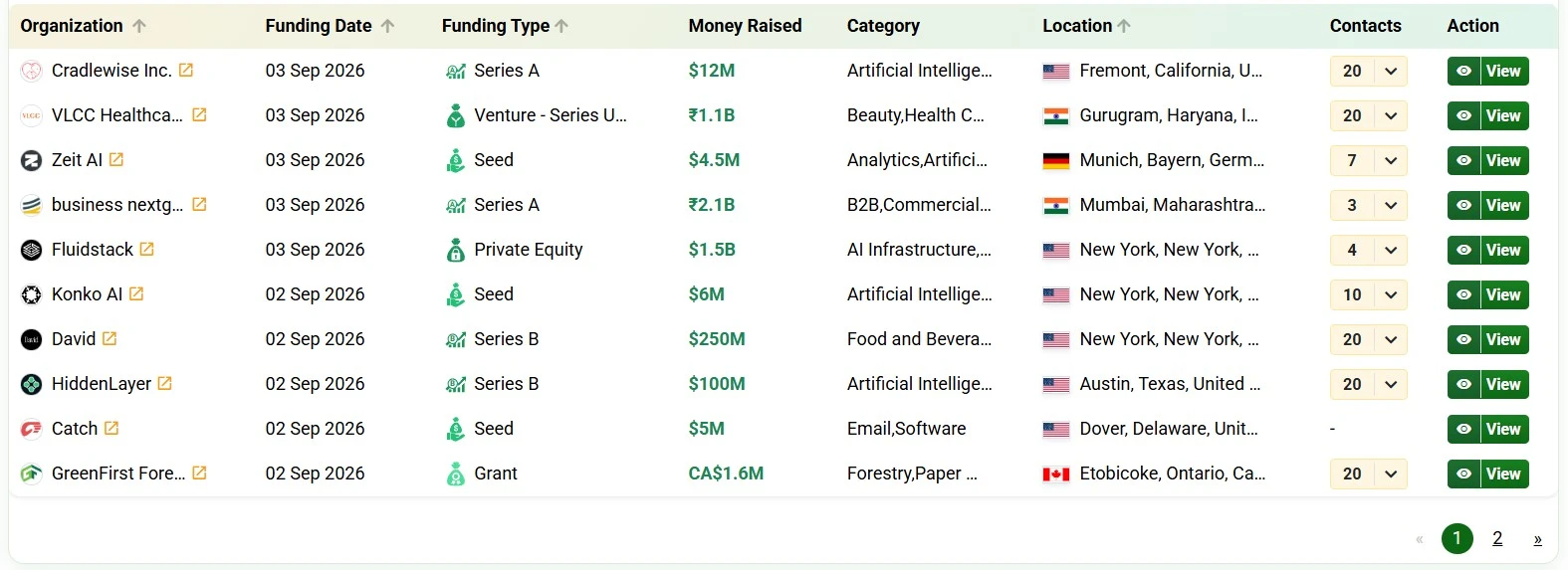
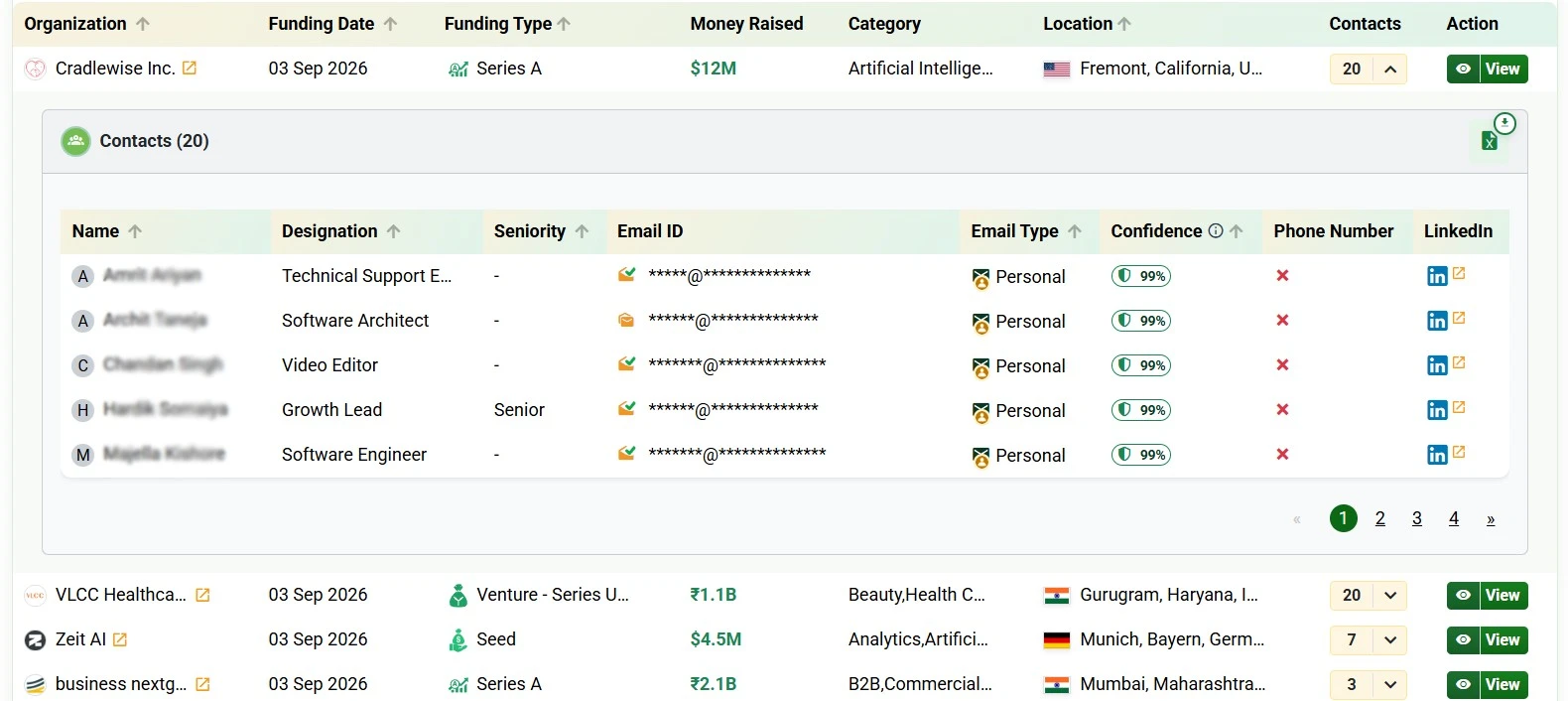
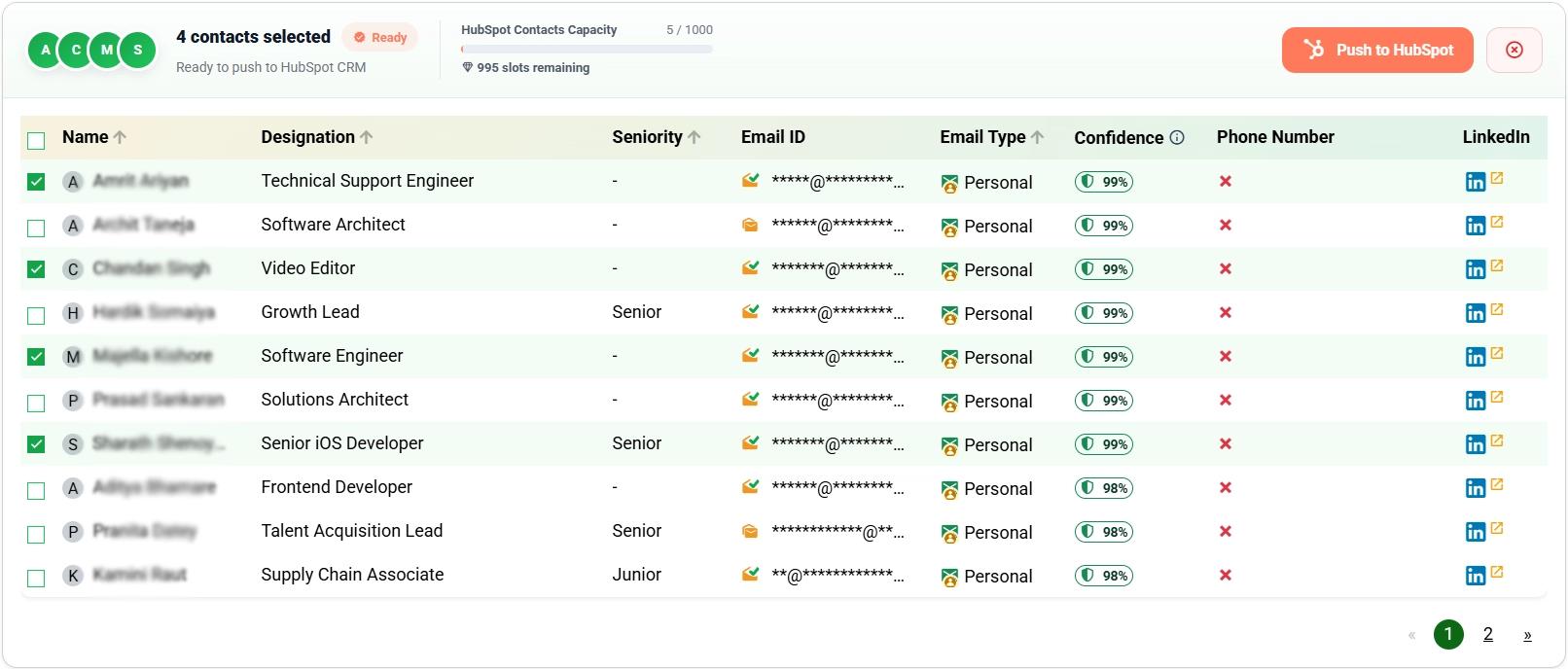
You can explore recently funded companies updated daily to see live records like this one.
How AgentsVerse Cloud implements the workflow
AgentsVerse Cloud applies this process to newly announced funding events and enriches matching companies with available funding, firmographic and decision-maker data. Current records can include verified professional emails, phone numbers, LinkedIn profiles and confidence scores.
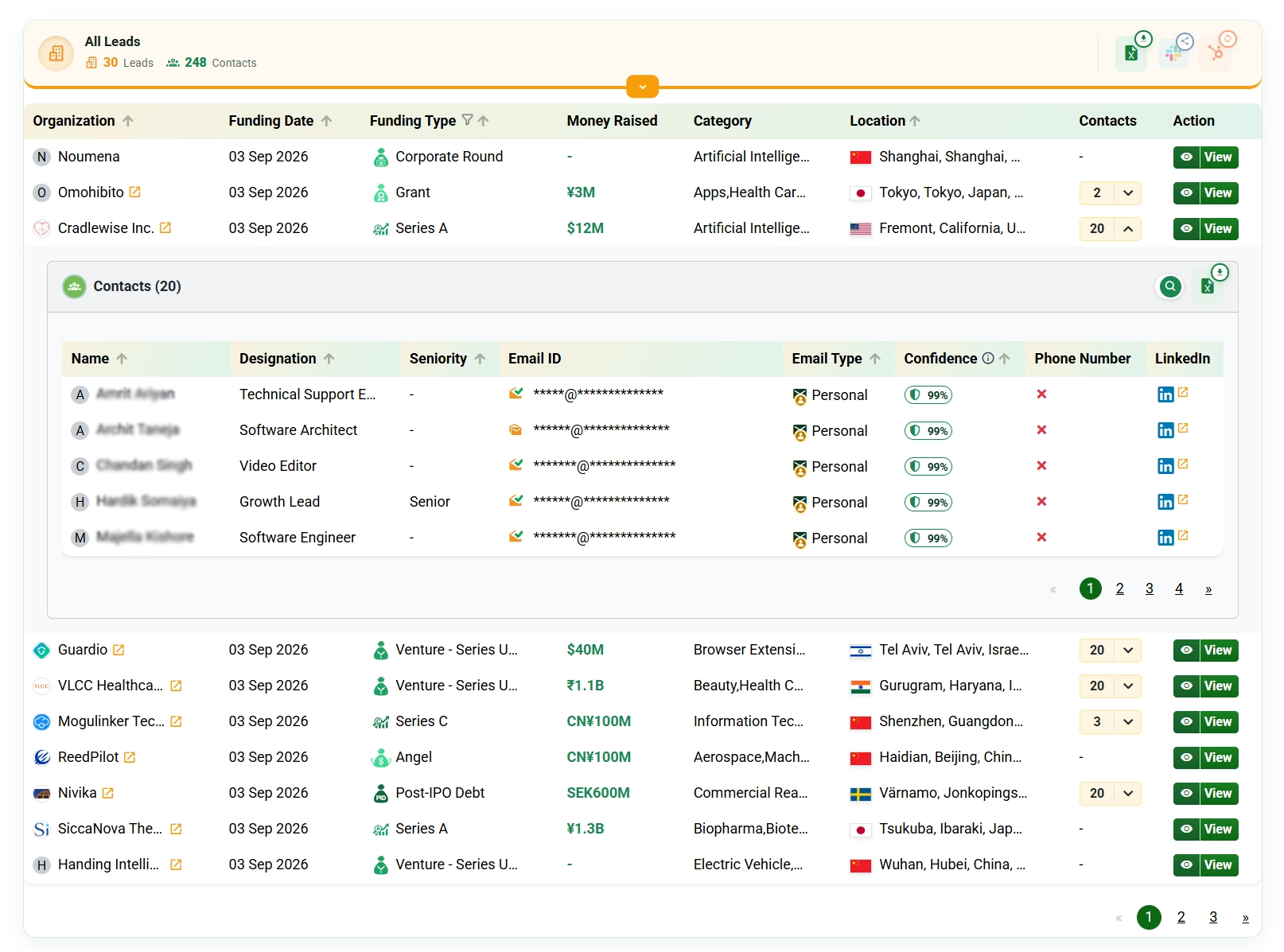
The Just Funded Companies AI Agent runs on a configurable daily schedule and typically delivers 20+ companies per day, up to approximately 600 per month, subject to matching events and your configured filters. Setup is no-code, with optional delivery integrations. Results can be reviewed in the dashboard, delivered through Slack or email, downloaded to Excel, or pushed as selected company and contact records into HubSpot.
For the product-specific methodology, see how AgentsVerse Cloud finds just-funded companies. To connect a CRM, follow the guide to push selected records into HubSpot.
Frequently asked questions
1. How does an AI agent find newly funded companies?
It monitors supported funding sources, extracts funding-event fields, verifies the company and event, removes duplicates, applies target-market filters, enriches the company and decision-makers, and delivers the completed records.
2. Which sources can be used to verify a funding round?
Sources can include company and investor announcements, regulatory filings, reputable funding news and established investment databases. Primary sources should be preferred when available.
3. How quickly can a funding announcement appear?
Timing depends on when the event is publicly announced, when a supported source reports it and how frequently the workflow runs. The public announcement date can differ from the transaction closing date.
4. Does receiving funding mean a company is ready to buy?
No. Funding is a timing and prioritization signal. The account must still be qualified using ICP fit, hiring, leadership changes, stated use of funds and other relevant context.
5. How are decision-makers matched to funded companies?
The company is first matched to the correct domain and identity. Relevant founders, executives or functional leaders are then selected based on the target role or use case.
6. How are duplicate funding events removed?
The workflow compares company identity, domain, announcement date, stage, amount and source information so multiple reports of the same transaction can be consolidated into one event.
7. Can the results be sent to a CRM?
Yes. A funding-agent workflow can deliver structured records to supported destinations. AgentsVerse Cloud currently supports pushing selected company and contact records into HubSpot.
8. What information should be reviewed before outreach?
Review the funding source and date, ICP fit, company context, role relevance, contact verification fields and any additional buying or organizational signals.
See recently funded companies and enriched contacts
Explore current funding records and the company and decision-maker fields available in AgentsVerse Cloud.
Want to compare plans first? View AgentsVerse Cloud pricing.