11 Best RevOps Tools & Platforms for 2026 (By Use Case)
 Published:
Last updated:
Published:
Last updated:

RevOps is not one software category. A modern revenue team may use one platform for CRM, another for forecasting, another for data and prospecting, and another for routing or workflow automation. The right stack depends on where your revenue process is breaking down.
This guide compares 11 RevOps tools by the job they do best, including CRM, revenue intelligence, prospecting and data enrichment, GTM orchestration, sales execution, account intent and workflow automation. The goal is not to crown one universal winner, but to help you choose the right tools for the way your team actually operates.
RevOps Tools at a Glance
Compare the leading RevOps tools by their primary use case, function and the teams they are best suited for.
| Tool | Best for | RevOps function | Ideal team |
|---|---|---|---|
| AgentsVerse Cloud | Funding signals & automated prospecting | Signals, enrichment & lead delivery | Founders, SDR, GTM and RevOps teams |
| HubSpot | All-in-one CRM & customer platform | CRM, marketing, sales & service | SMB to mid-market |
| Salesforce / Agentforce Revenue Management | Enterprise CRM & revenue lifecycle management | CRM, quoting, billing & revenue operations | Mid-market to enterprise |
| Clari + Salesloft | Predictive revenue orchestration | Forecasting, execution & revenue AI | Mid-market to enterprise |
| Gong | Revenue intelligence & conversation insights | Deal intelligence, coaching & pipeline risk | Sales and revenue teams |
| Clay | GTM data workflows | Enrichment, signals & orchestration | GTM Ops and growth teams |
| Apollo | Prospecting database & outbound | B2B data, enrichment & engagement | SMB to mid-market |
| LeanData | Lead routing & GTM orchestration | Routing, matching & workflow control | Mid-market to enterprise |
| 6sense | Account intent & ABM | Intent, account prioritization & ABM | Mid-market to enterprise |
| Backstory | Deal inspection & CRM activity capture | Pipeline intelligence & CRM hygiene | Sales and RevOps teams |
| Zapier | Cross-app workflow automation | Automation & integrations | Teams of all sizes |
What Are RevOps Tools and Why They Matter
RevOps tools are software platforms that help revenue teams manage the systems, data and workflows behind growth. They can support everything from lead generation and CRM management to forecasting, routing, sales engagement, customer retention and reporting.
The key point is that RevOps is broader than CRM. A CRM stores customer and opportunity data, while a RevOps stack connects the tools and processes used by marketing, sales, customer success and finance. The best setup gives teams a shared view of the revenue journey, reduces manual handoffs and keeps data usable across systems.
For most companies, the objective is not to buy more software. It is to build a smaller, better-connected stack where each tool has a clear job and data can move cleanly from first signal to closed revenue.
How a Modern RevOps Stack Fits Together
Most RevOps teams do not run on a single platform. They use a connected stack, with each layer solving a different part of the revenue process.
Data & Signals
Tools such as AgentsVerse Cloud, Apollo, Clay and 6sense help teams identify accounts, enrich company and contact data, and surface buying or intent signals.
CRM
HubSpot and Salesforce act as the system of record for customer, account, opportunity and activity data.
Routing & Orchestration
LeanData and automation platforms such as Zapier help move records, trigger actions and keep workflows consistent across systems.
Sales Execution
Salesloft, now part of the merged Clari + Salesloft company, supports seller workflows and engagement across the pipeline.
Revenue Intelligence
& Forecasting
Gong, Clari and Backstory help teams understand pipeline quality, buyer activity, deal risk and forecast confidence.
The best RevOps stack is the one where these layers work together with minimal manual work and a clear source of truth.
Best RevOps Tools and Platforms to Know
Below are some of the best RevOps tools and platforms used by modern teams in 2026, organized by the use case each one solves best.
1. AgentsVerse Cloud — Best for Funding Signals & Automated Prospecting

Best for: Funding signals, automated list building and contact enrichment.
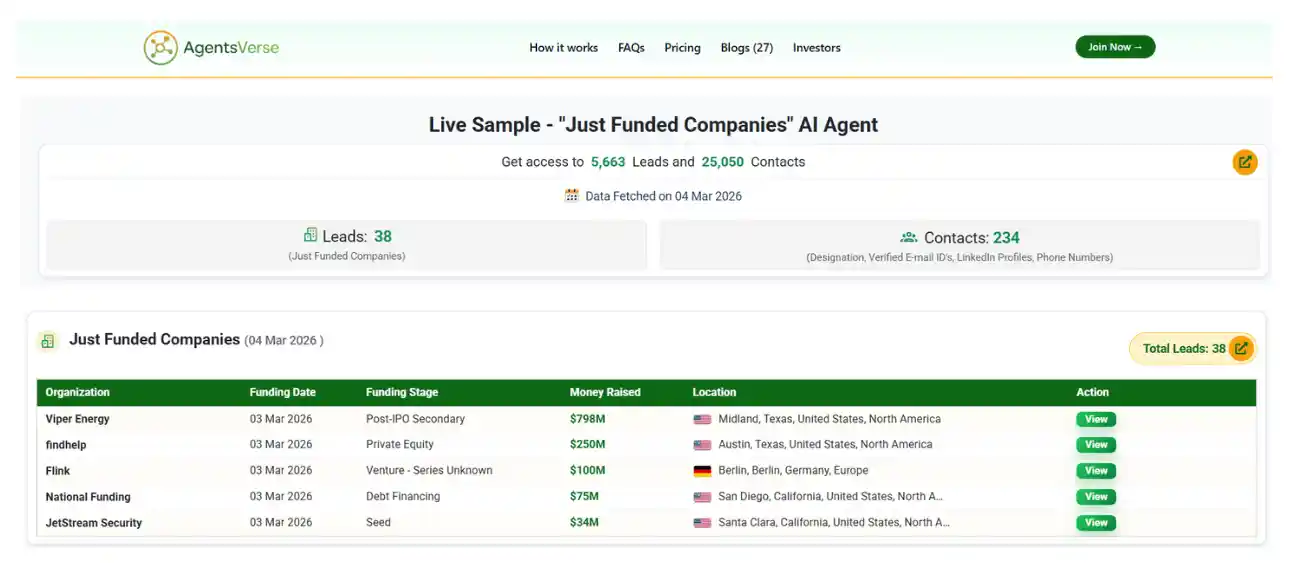
AgentsVerse Cloud is a signal-based lead generation and data enrichment platform built around newly funded companies. It automatically identifies funded companies, enriches the right decision-makers, verifies contact information and delivers ready-to-contact leads to the tools where revenue teams already work.
Why RevOps teams use it: It removes much of the manual work that happens before outreach. Instead of using separate tools for funding discovery, company enrichment, contact discovery, verification and delivery, teams can automate the workflow from funding signal to CRM-ready lead.
Key strengths
- Tracks newly funded companies globally
- Enriches companies and decision-makers
- Verified emails, LinkedIn profiles, roles, phone details and confidence scores for email addresses
- Delivers leads to HubSpot, Slack, email and downloadable files
- Autopilot workflow with up to 600 funded companies per month on the Starter plan
Limitations
- Best suited to teams that want funding as a primary prospecting signal
- Not a replacement for a full CRM, conversation-intelligence platform or enterprise forecasting system
2. HubSpot — Best All-in-One CRM for Growing Revenue Teams
Best for: An integrated CRM and customer platform for sales, marketing and service.
HubSpot combines CRM data with sales, marketing, service, content and automation capabilities. For RevOps teams, its biggest advantage is having multiple customer-facing functions work from the same underlying record and workflow system.
Why RevOps teams use it: It is a practical choice for companies that want to reduce fragmentation without building a highly customized enterprise stack. RevOps teams can use HubSpot to manage pipeline, automate handoffs, connect apps and maintain a shared customer view across departments.
Key strengths
- Strong CRM foundation
- Integrated sales, marketing and service workflows
- Large integration ecosystem
- Good fit for growing teams that want fewer disconnected systems
Limitations
- Costs can increase as teams add advanced hubs, seats and functionality
- Highly complex enterprise processes may require more customization or specialist tooling
3. Salesforce / Agentforce Revenue Management — Best for Enterprise CRM & Revenue Lifecycle Management
Best for: Enterprise-grade CRM and revenue lifecycle management.
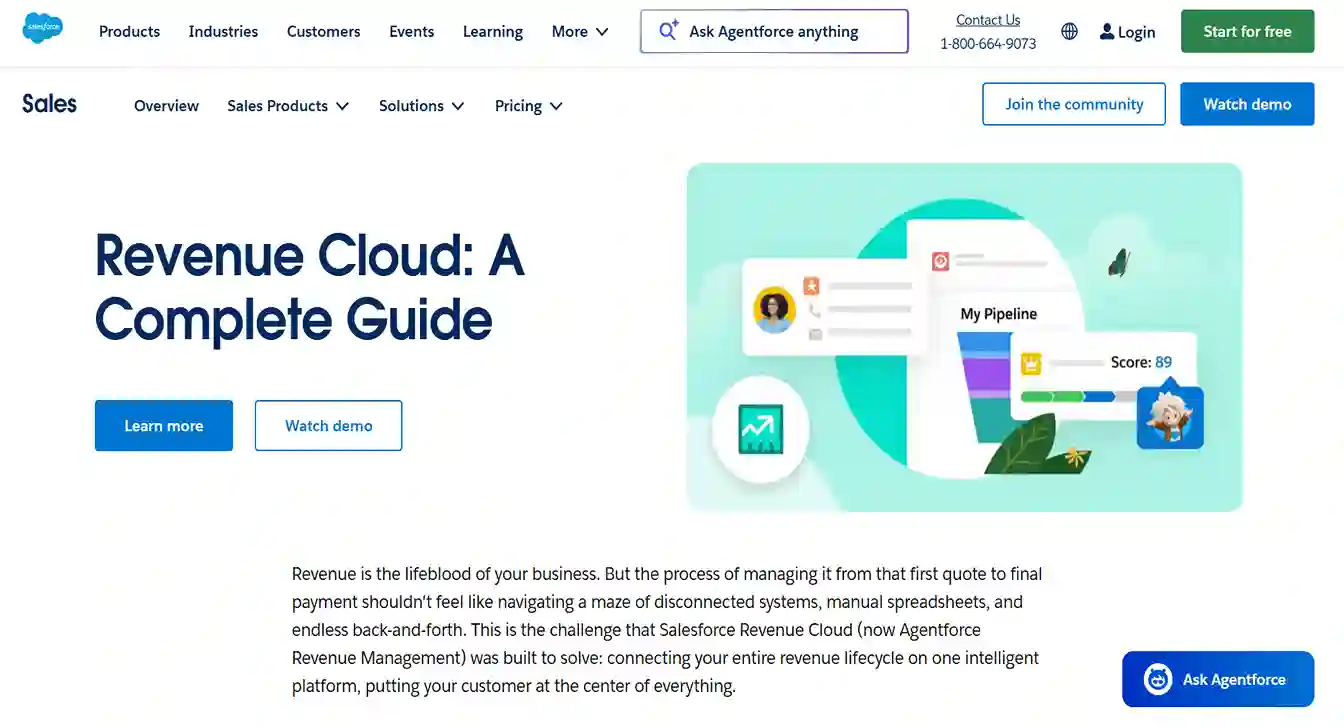
Salesforce remains a core system of record for complex revenue organizations. Its former Revenue Cloud is now positioned as Agentforce Revenue Management, extending the Salesforce platform into pricing, quoting, contracts, orders, invoicing and other revenue lifecycle processes.
Why RevOps teams use it: RevOps teams use Salesforce when they need deep customization, strong ecosystem support and a platform that can connect sales, finance, legal and operations around enterprise revenue workflows.
Key strengths
- Highly configurable CRM and data model
- Strong ecosystem of apps, partners and consultants
- Revenue lifecycle capabilities spanning quote-to-cash
- Suitable for complex enterprise processes and governance
Limitations
- Implementation and administration can be resource-intensive
- Often requires specialist configuration and a larger budget than SMB-focused CRM products
4. Clari + Salesloft — Best for Predictive Revenue Orchestration
Best for: Forecasting, seller execution and revenue orchestration.
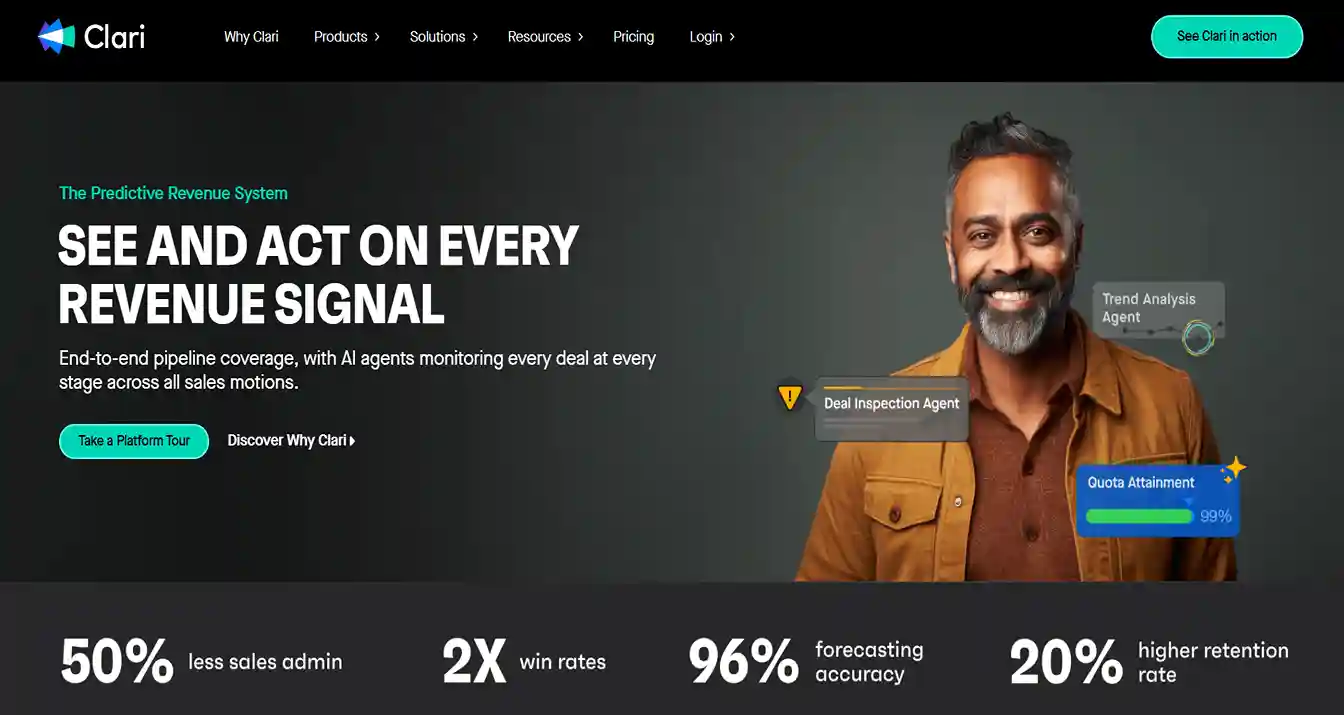
Clari and Salesloft completed their merger in December 2025 and are building what they call a Predictive Revenue System. The combined offering brings together Clari's forecasting and revenue intelligence strengths with Salesloft's seller workflows and engagement capabilities.
Why RevOps teams use it: For RevOps teams, the value is the connection between what the revenue data says and what sellers should do next. The combined company is focused on turning pipeline signals, activity and forecasts into coordinated revenue actions.
Key strengths
- Revenue forecasting and pipeline visibility
- Sales engagement and seller workflows
- AI-assisted prioritization and next actions
- Broad revenue context across data, signals and execution
Limitations
- Primarily aimed at larger revenue organizations
- Pricing and implementation generally require a sales-led buying process
5. Gong — Best for Revenue Intelligence & Conversation Insights
Best for: Revenue intelligence, deal visibility and seller coaching.
Gong captures customer interactions, analyzes what is happening across deals and uses AI to surface patterns, risks and next steps. Its strength is turning conversations and activity into usable revenue intelligence rather than relying only on manually entered CRM fields.
Why RevOps teams use it: RevOps and sales leaders use Gong to improve deal inspection, coaching, pipeline visibility and understanding of buyer behavior across the revenue cycle.
Key strengths
- Conversation and interaction intelligence
- Deal and pipeline risk visibility
- AI-driven insights for managers and sellers
- Useful coaching and enablement data
Limitations
- Usually better suited to teams with enough sales activity to justify the platform
- Pricing is not positioned as a low-cost self-serve option
6. Clay — Best for GTM Data Workflows
Best for: Flexible enrichment, signal tracking and GTM workflow building.
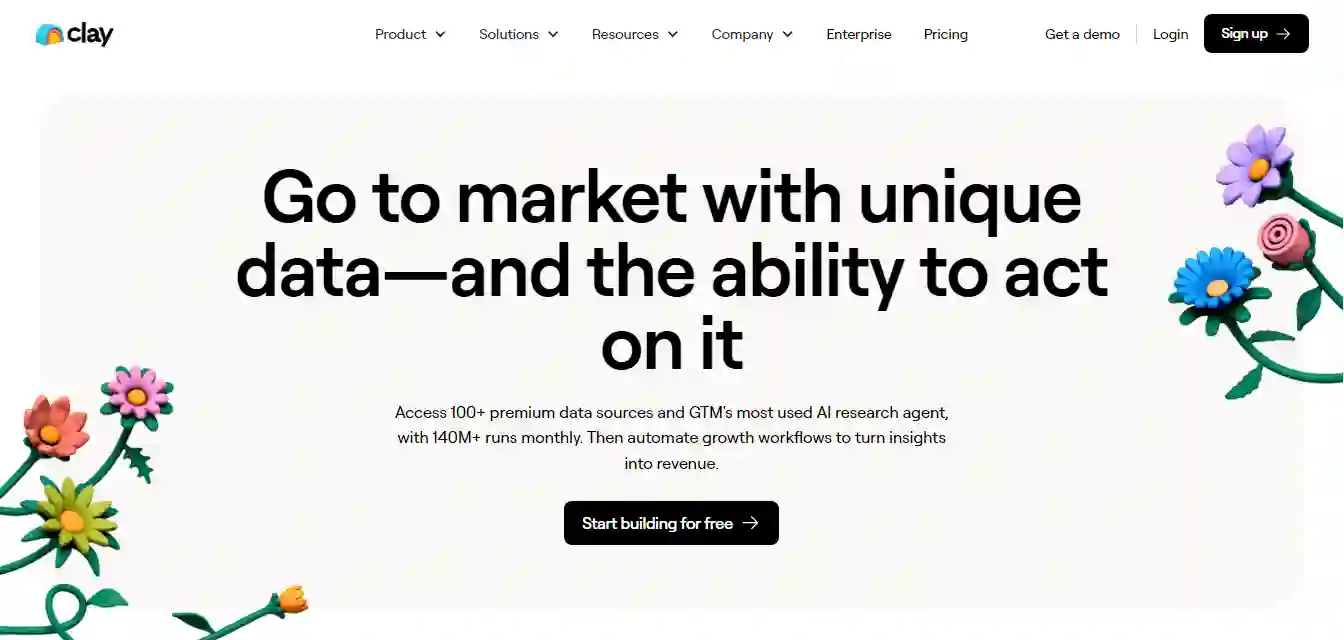
Clay is built for teams that want to combine data from multiple providers, enrich accounts and contacts, track signals and create custom GTM workflows. It is especially useful when a RevOps or GTM Ops team wants more control over how data is sourced, transformed and pushed into downstream systems.
Why RevOps teams use it: Its value is flexibility. Teams can build sophisticated enrichment and prospecting workflows without having to rely on one data source or one fixed process.
Key strengths
- Multi-provider data enrichment and waterfalls
- Signals and intent tracking
- AI-assisted research with Claygent
- CRM enrichment and workflow orchestration
- Flexible outbound and audience-building workflows
Limitations
- More configurable than turnkey, so teams need to design and maintain workflows
- Usage and data-credit economics need to be managed carefully at scale
7. Apollo — Best for Prospecting Database & Outbound Execution
Best for: B2B prospect data, enrichment and outbound sales workflows.
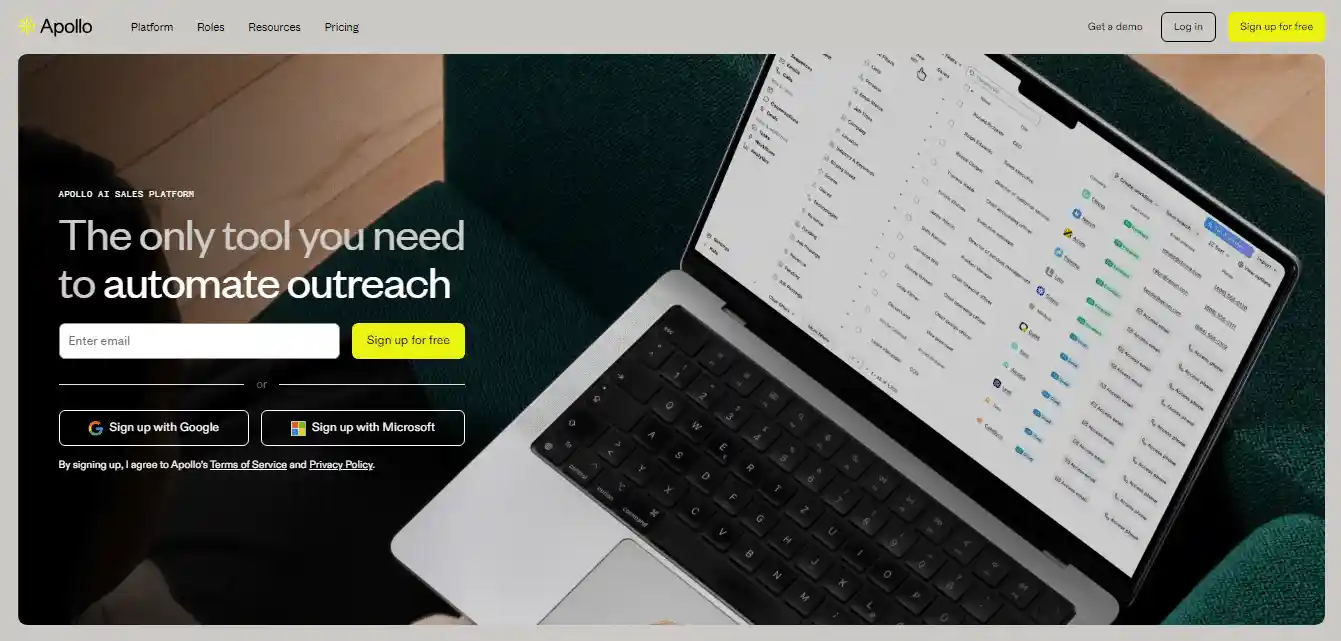
Apollo combines a B2B contact and company database with enrichment, workflow automation and outbound sales capabilities. It is a practical option for teams that want prospecting data and sales execution in the same platform.
Why RevOps teams use it: RevOps teams use Apollo to support outbound motions, keep prospect data fresh and give sales teams a self-serve way to build lists, enrich contacts and run outreach.
Key strengths
- Large B2B company and contact dataset
- Outbound prospecting and engagement workflows
- Data enrichment capabilities
- Workflow automation and integrations
- Accessible for smaller teams as well as larger sales organizations
Limitations
- Broad databases can still require careful filtering and validation for specific ICPs
- Teams with highly specialized signal strategies may still need additional data or intent sources
8. LeanData — Best for Lead Routing & GTM Orchestration
Best for: Routing, matching and orchestration across complex B2B go-to-market processes.
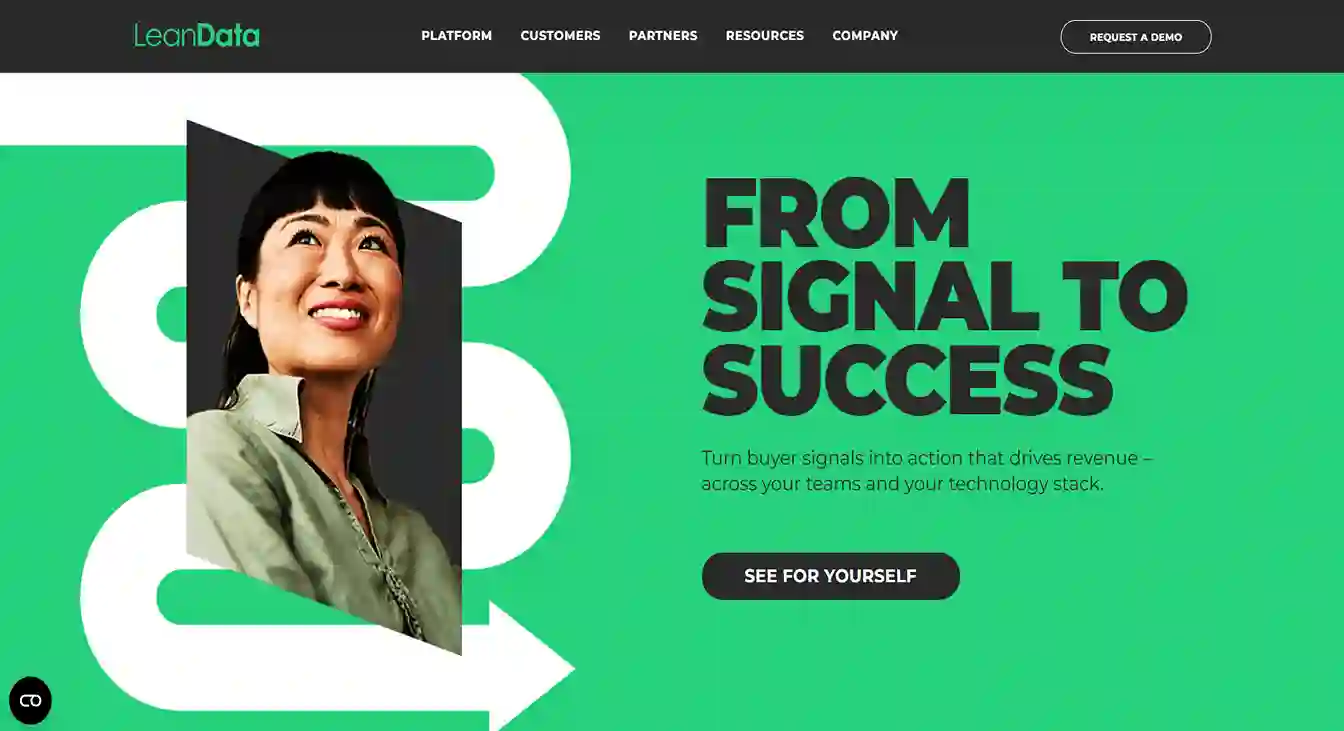
LeanData helps revenue teams route leads and accounts, match records and orchestrate actions across the buyer journey. Its 2026 positioning increasingly focuses on making every GTM signal actionable by sending it to the right person, system or workflow.
Why RevOps teams use it: RevOps teams use LeanData when routing logic and handoffs have become too complex for basic CRM assignment rules. It is particularly valuable in organizations with territories, multiple segments, account ownership rules and sophisticated inbound or outbound motions.
Key strengths
- Advanced lead-to-account matching
- Flexible routing logic
- Strong orchestration for complex GTM processes
- Helps enforce process consistency across teams and systems
Limitations
- More capability than many small teams need
- Implementation requires thoughtful process design and governance
9. 6sense — Best for Account Intent & ABM
Best for: Intent data, account prioritization and account-based revenue programs.
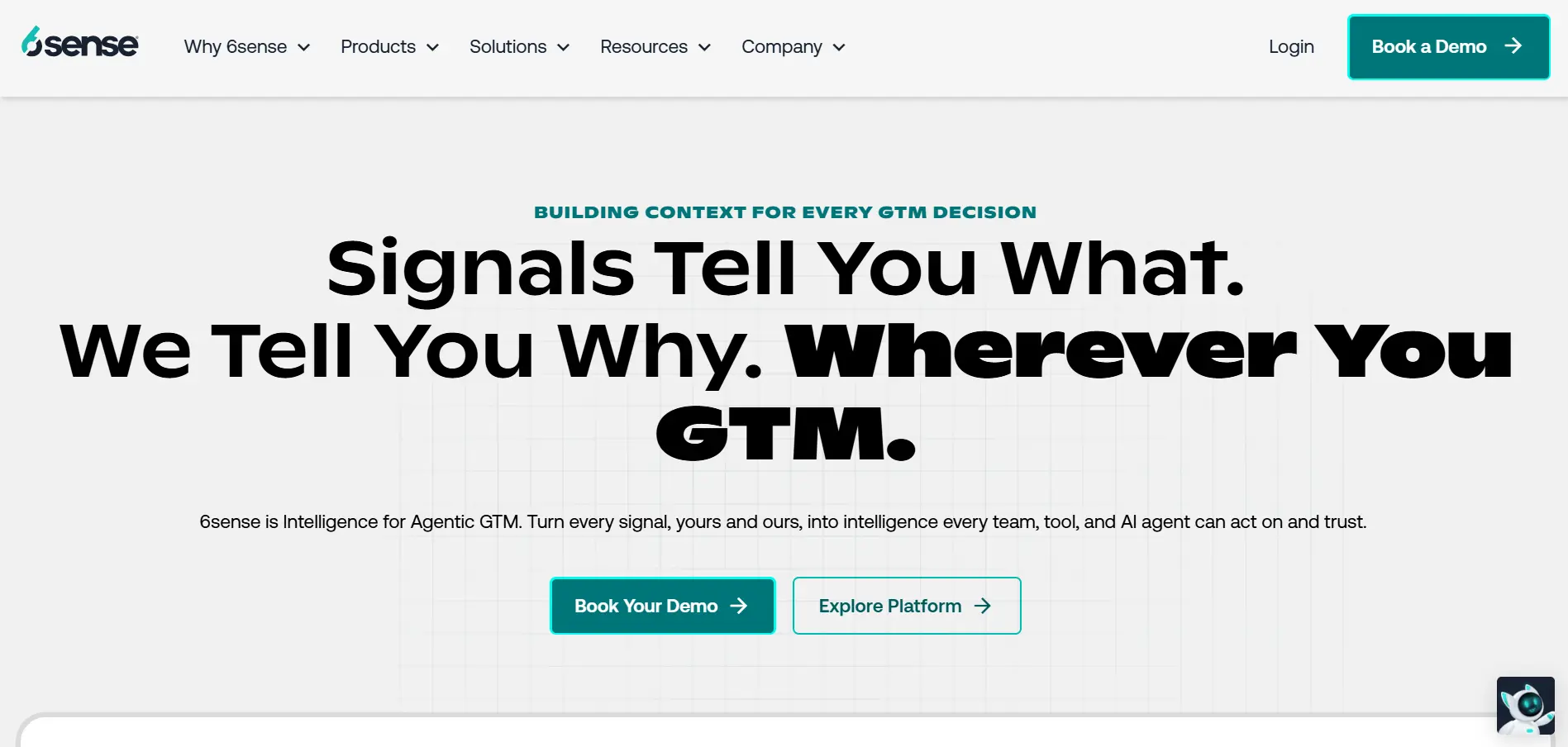
6sense helps B2B revenue teams identify accounts that may be in market, prioritize them and coordinate marketing and sales actions. Its platform combines intent and buyer data with account prioritization, workflows, audience building and sales intelligence.
Why RevOps teams use it: RevOps teams use 6sense when the challenge is not simply finding more accounts, but deciding which accounts deserve attention now and coordinating action across marketing and sales.
Key strengths
- Intent and buyer-signal data
- Account prioritization and predictive modeling
- ABM audience and workflow capabilities
- Sales alerts and account intelligence
- Useful for coordinated marketing and sales motions
Limitations
- Most relevant when a company already has enough scale, data and process maturity for ABM
- Typically requires a larger budget and implementation commitment than self-serve prospecting tools
10. Backstory — Best for Deal Inspection & CRM Activity Capture
Best for: Deal inspection, pipeline evidence and CRM hygiene.
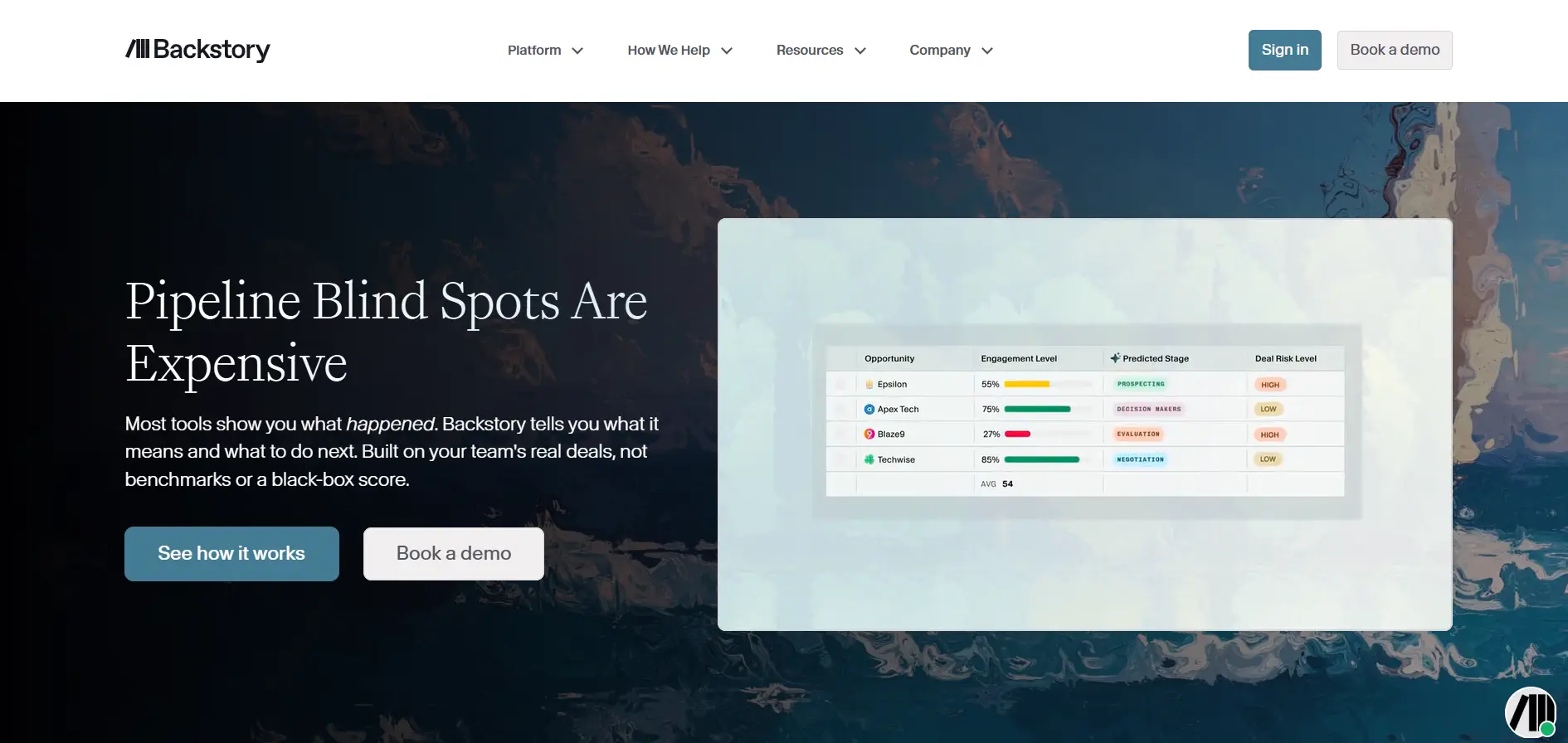
Backstory, formerly People.ai, focuses on helping sales and RevOps teams understand what is actually happening inside active deals. It captures customer-facing activity, connects it to CRM records and highlights evidence such as stalled communication, missing stakeholders or weak next steps.
Why RevOps teams use it: For RevOps leaders, this can improve confidence in pipeline reviews because the analysis is based on observed activity rather than only on what a seller remembered to enter into the CRM.
Key strengths
- Automatic activity capture
- Evidence-based deal inspection
- Improves CRM completeness and hygiene
- Helps identify deal risk and missing buying-team coverage
Limitations
- Focused primarily on active pipeline and revenue execution rather than top-of-funnel prospecting
- Best value comes in organizations with established CRM and sales-process discipline
11. Zapier — Best for Cross-App RevOps Automation
Best for: Connecting apps and automating repetitive workflows across the revenue stack.
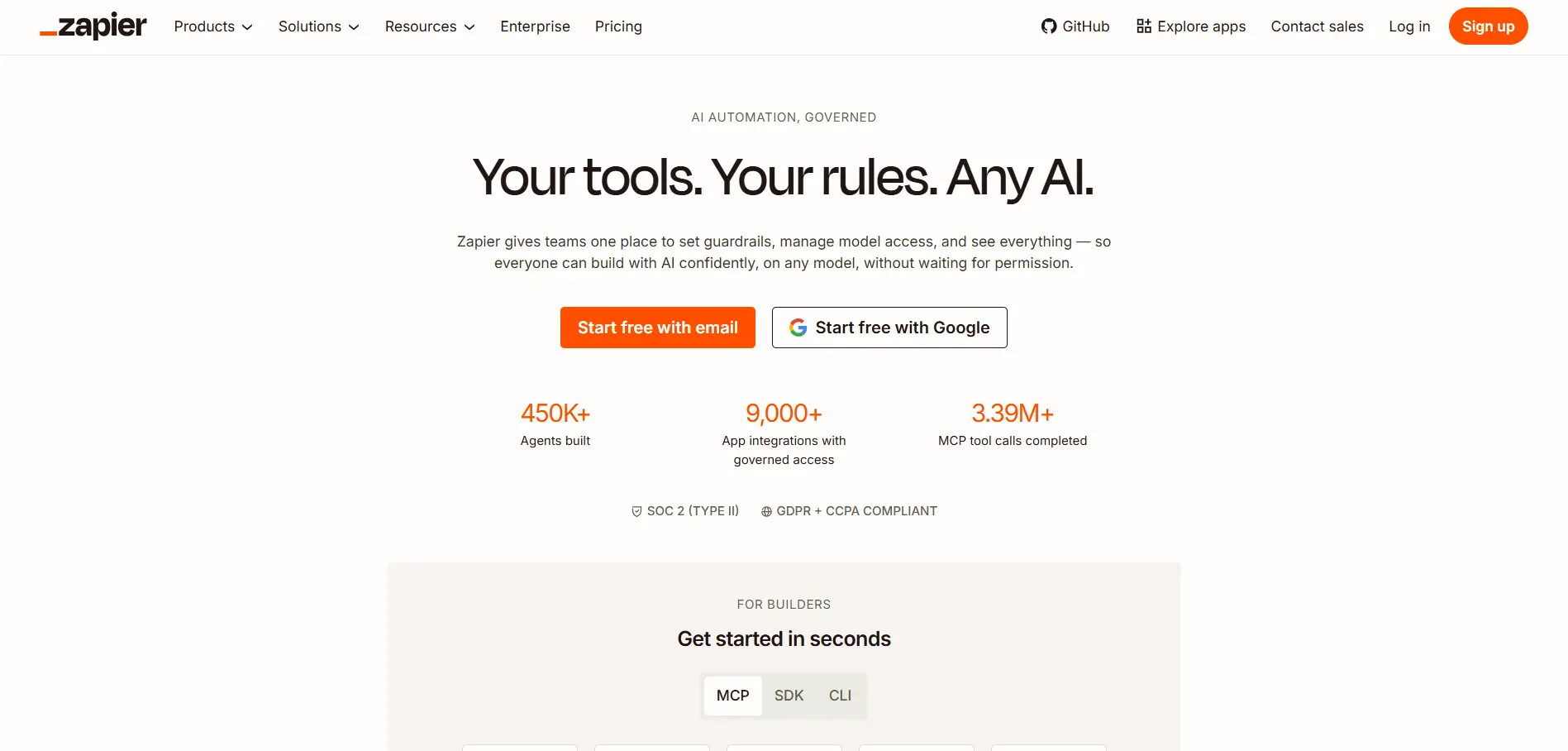
Zapier connects thousands of business applications and lets teams automate workflows without building custom integrations for every process. For RevOps, it can act as the connective layer between CRM, lead sources, spreadsheets, messaging tools and other operational systems.
Why RevOps teams use it: It is especially useful for lightweight automation: creating records, sending alerts, synchronizing information and triggering next steps when a specific event happens in another tool.
Key strengths
- Large app-integration ecosystem
- Fast no-code workflow automation
- Useful for lead management and sales-pipeline processes
- Can reduce manual copying between systems
Limitations
- Complex mission-critical workflows may need stronger governance or native integrations
- Task volume can affect cost and operational complexity
How to Choose the Right RevOps Tools for Your Business
Start with the bottleneck, not the software category. A RevOps stack should solve a specific operational problem and fit the systems you already use.
Identify the biggest bottleneck.
Is the problem account discovery, data quality, CRM adoption, routing, seller execution, forecasting or customer retention? Buy for the constraint that is slowing revenue today.
Check your existing CRM.
Your RevOps tools should work cleanly with the CRM and data model your team already depends on. Integration quality matters more than a long feature list.
Evaluate data quality.
If a tool depends on company, contact or intent data, look at freshness, verification, coverage and how easily bad data can enter downstream systems.
Look at workflow automation.
Ask how much manual work remains after implementation. The goal is not to add another dashboard; it is to remove repetitive operational work.
Match the tool to team size and process complexity.
A five-person GTM team and a global enterprise should not build the same stack.
Understand the pricing model.
Review seats, credits, data usage, integrations and implementation costs, not just the headline subscription price.
Evaluate AI in context.
AI is useful when it improves prioritization, research, forecasting or execution. It should make a revenue process better, not simply add another feature layer.
The best RevOps stack
The best RevOps stack is usually smaller than teams expect: a reliable CRM, strong data and signals, clear orchestration, and only the execution or intelligence tools that solve a real business need.
Best RevOps Stack for a B2B SaaS Company
A practical B2B SaaS stack can be built around six clear jobs instead of trying to make one platform do everything.
| Layer | Suggested Tool | Role in the Stack |
|---|---|---|
| Signals & Prospect Data | AgentsVerse Cloud | Find newly funded accounts, enrich decision-makers and deliver verified contacts. |
| CRM | HubSpot or Salesforce | Maintain the system of record for accounts, contacts, opportunities and activity. |
| Sales Execution | Clari + Salesloft | Coordinate seller workflows, engagement and execution. |
| Revenue Intelligence | Gong | Analyze buyer conversations, deal activity and pipeline risk. |
| Workflow Automation | Zapier or LeanData | Connect systems, route records and trigger next steps. |
| Forecasting / Orchestration | Clari + Salesloft | Turn pipeline signals and forecast data into coordinated revenue action. |
The exact mix depends on company size and motion. A smaller SaaS company may use HubSpot plus AgentsVerse Cloud and Zapier, while a larger revenue organization may need Salesforce, LeanData, Gong and Clari + Salesloft around the same data foundation.
Common RevOps Tooling Mistakes to Avoid
The biggest RevOps mistake is treating software as the strategy. Tools only help when the underlying process, ownership and data model are clear.
Too Many Overlapping Tools
Multiple platforms solving the same job create duplicate data, extra cost and confusion over which system is trusted.
Ignoring Data Quality
Automation makes bad data move faster. Verification, deduplication and clear ownership should be designed before adding more workflows.
Automating a Broken Process
If routing, qualification or handoffs are unclear, automation will scale the inconsistency rather than fix it.
Buying Enterprise Complexity Too Early
Choose the simplest system that supports your current operating model and expected growth.
Measuring Activity Instead of Revenue Impact
RevOps tooling should improve speed, conversion, forecast confidence, data quality or cost efficiency. If it does none of those, it is probably adding noise.
RevOps works best when people, process and tools move together, not when tooling is asked to compensate for the other two.
Common RevOps Tooling Mistakes to Avoid
RevOps platforms are moving toward fewer disconnected tools, richer data foundations and more AI-driven execution. The important shift is not AI by itself; it is the ability to turn live revenue signals into useful action.
Expect more signal-based prospecting, automated enrichment, AI-assisted deal inspection, predictive forecasting and workflow orchestration across CRM, sales engagement and customer systems. At the same time, teams will put more pressure on vendors to prove data quality, integration depth and measurable operational value.
The strongest RevOps stacks will combine reliable data with clear automation, while keeping humans in control of the decisions that require judgment.
Final Takeaway
There is no single RevOps platform that is best at every job. HubSpot and Salesforce are strong systems of record, Gong and Backstory improve revenue intelligence, LeanData and Zapier help orchestrate workflows, 6sense adds account intent, and Clari + Salesloft connects forecasting with revenue execution.
For teams whose bottleneck sits earlier in the funnel, finding fresh accounts, identifying the right decision-makers and enriching verified contact data before those leads enter the CRM, AgentsVerse Cloud is designed to automate that layer.
The right RevOps stack starts with the business problem, then adds the smallest number of tools needed to solve it well.
To know more, explore the AgentsVerse Cloud blog section!
Frequently Asked Questions (FAQs)
1. What is the best RevOps tool?
The best RevOps tool depends on the problem you need to solve. HubSpot and Salesforce are strong CRM foundations, Gong is strong for revenue intelligence, LeanData for routing, 6sense for intent and ABM, Clari + Salesloft for revenue orchestration, and AgentsVerse Cloud for funding signals, automated prospecting and data enrichment.
2. What tools do RevOps teams use?
RevOps teams commonly use a mix of CRM, data and enrichment, routing, sales engagement, revenue intelligence, forecasting and automation tools. The objective is not to use every category, but to connect the tools that support your actual revenue process.
3. What is the best RevOps stack for SaaS?
A practical SaaS RevOps stack usually includes a CRM such as HubSpot or Salesforce, a prospect-data and signal layer such as AgentsVerse Cloud, a sales execution platform, workflow automation and a revenue intelligence or forecasting tool. Smaller teams can start with fewer platforms and add complexity only when the operating model requires it.
4. Is HubSpot a RevOps tool?
Yes. HubSpot can play a central role in a RevOps stack because it combines CRM data with sales, marketing, service and automation capabilities. It may act as the core platform while specialized tools handle functions such as intent, prospecting, routing or advanced revenue intelligence.
5. What is the difference between CRM and RevOps software?
A CRM is primarily the system of record for customer, account, opportunity and activity data. RevOps software is a broader category that includes the tools used to generate, route, enrich, analyze and act on revenue data across marketing, sales, customer success and finance.
6. How many tools should a RevOps stack have?
There is no ideal number. The better question is whether every tool has a distinct job. A lean team may operate effectively with three or four core platforms, while an enterprise may need a larger stack because of complex routing, territories, forecasting, governance and customer-lifecycle requirements.
7. What are AI RevOps tools?
AI RevOps tools use AI to improve tasks such as prospect research, enrichment, account prioritization, forecasting, deal inspection, conversation analysis and workflow automation. The most useful AI features are tied to a measurable revenue process rather than added as standalone assistants.
8. Where does AgentsVerse Cloud fit in a RevOps stack?
AgentsVerse Cloud sits at the signal, prospecting and data-enrichment layer. It identifies newly funded companies, enriches decision-makers, verifies contact information and delivers the resulting leads to systems such as HubSpot, Slack and email so sales teams can act earlier with less manual list building.
Automate the Prospecting Layer of Your RevOps Stack
AgentsVerse Cloud finds newly funded companies, enriches decision-makers and delivers verified leads daily to HubSpot, Slack and email.
Start a 5-day free trial. No credit card required.
Start a trial →