
What is Lead Qualification - Meaning, Stages and Best Practices

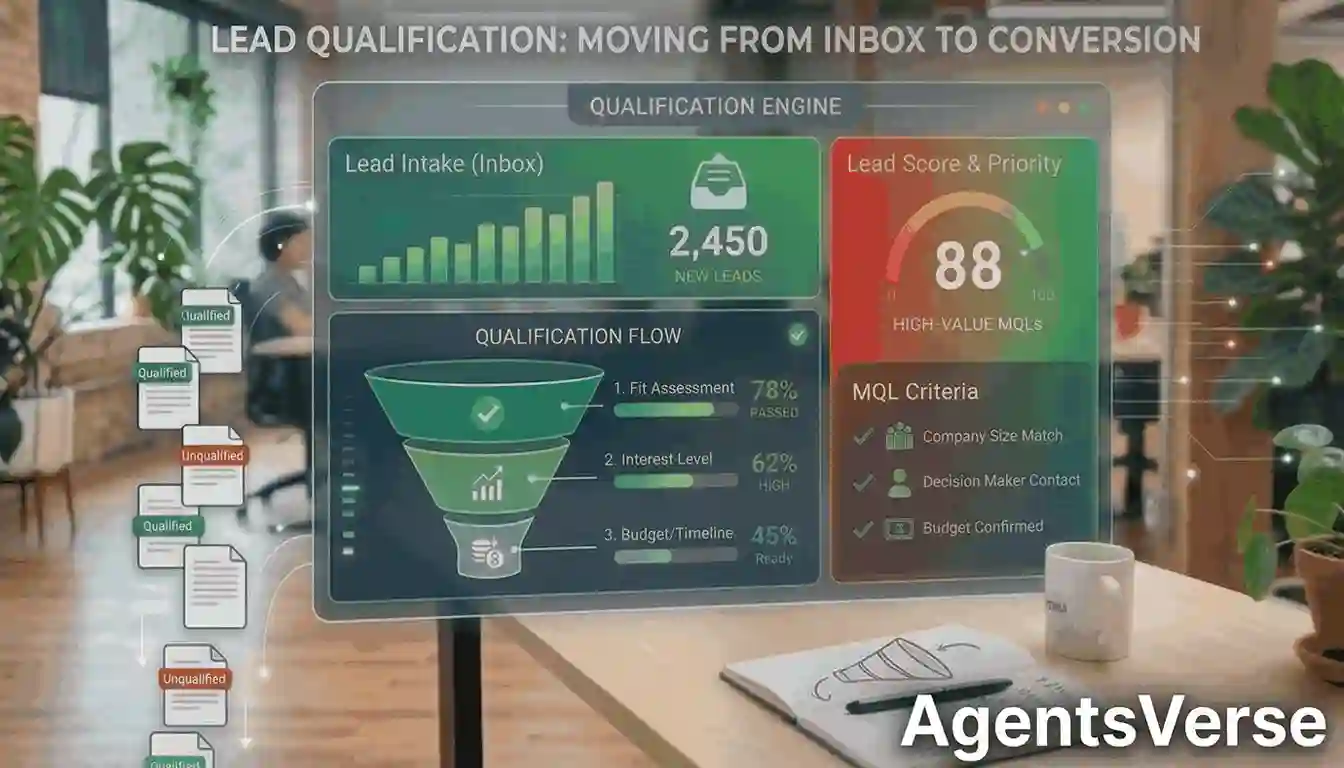
Lead qualification is a key step in the sales process that helps businesses identify which prospects are most likely to become paying customers. Not every person who shows interest in a product or service is ready to buy. That is why companies need a clear lead qualification process to focus on the right opportunities.
In simple terms, lead qualification refers to evaluating potential customers to determine whether they are a good fit for your product, service, or solution. It helps sales teams spend time on high-value prospects instead of chasing leads that will never convert.
Without a proper system, businesses may waste time contacting the wrong prospects. A well-defined lead generation and lead qualification strategy helps marketing and sales teams work together and convert more leads into customers.
In this informative blog, you will learn what lead qualification is, why it matters, the different lead qualification stages, and the most effective lead qualification best practices.
What is Lead Qualification?
What is lead qualification? It is the process of analyzing potential customers and deciding whether they are likely to buy your product or service.
A business may generate hundreds or even thousands of leads through marketing campaigns. But only a small portion of those leads are ready to purchase. Lead qualification helps companies filter and prioritize the best prospects.
Key goals of lead qualification
- Identify leads who match your ideal customer profile.
- Focus sales efforts on prospects with high buying intent.
- Improve conversion rates.
- Reduce wasted time and effort.
- Align marketing and sales teams.
For example, if someone downloads an eBook from your website, they may show interest. However, they may not have the budget or authority to buy your product. The lead qualification process helps determine whether that lead should move forward in the sales pipeline.
In short, lead qualification helps businesses work smarter by targeting the right audience.
Why the Lead Qualification Process is Important
A structured lead qualification process brings clarity and efficiency to the sales pipeline.
In fact, research shows that about 73% of leads are not ready to buy during their first interaction with a brand. This highlights why a structured lead qualification process is essential to identify prospects who are truly ready to move forward in the sales pipeline.
Without qualification, sales teams may spend hours contacting leads that are not serious buyers. But when the process is clear, businesses can focus on prospects that truly matter.
Benefits of lead qualification
The benefits of lead qualification are as follows:
1. Improves sales productivity
Sales representatives spend less time on unqualified leads and more time closing deals.
2. Shortens the sales cycle
Qualified leads are already interested and closer to making a purchase.
3. Aligns marketing and sales teams
Both teams share the same understanding of what makes a qualified lead.
4. Improves customer experience
Prospects receive relevant communication that matches their needs.
5. Increases revenue potential
When businesses focus on the right prospects, conversion rates improve.
This is why companies invest heavily in tools and systems that support lead generation and lead qualification strategies.
Lead Qualification Meaning in Sales
The lead qualification meaning in sales goes beyond simply identifying interested prospects. It involves evaluating several factors to determine whether a lead is worth pursuing.
Sales teams usually assess the following elements:
Common lead qualification criteria
Budget: Does the lead have the money to buy the product?
Authority: Can the person make the purchase decision?
Need: Does the prospect truly need the solution?
Timeline: When do they plan to buy?
These factors help businesses determine whether the lead fits their ideal customer profile.
When a lead meets these conditions, it moves further in the sales pipeline.
Understanding the Lead Qualification Stages
The lead qualification stages represent the journey a prospect takes before becoming a customer.
Each stage shows how ready the lead is to make a purchase.
1. Marketing Qualified Lead (MQL)
An MQL is a prospect who has shown interest in your business.
They may have:
- ● Downloaded a resource.
- ● Subscribed to a newsletter.
- ● Registered for a webinar.
- ● Engaged with marketing content.
At this stage, the lead still needs nurturing before speaking with sales.
2. Sales Accepted Lead (SAL)
Once marketing passes the lead to the sales team, it becomes a Sales Accepted Lead.
The sales team checks whether the lead matches the agreed lead qualification criteria.
If the lead fits the profile, it moves forward.
3. Sales Qualified Lead (SQL)
A Sales Qualified Lead shows strong buying intent.
These prospects usually:
- ● Have a clear problem.
- ● Understand the solution.
- ● Show interest in a demo or consultation.
- ● Have decision-making authority.
At this stage, the sales team begins serious conversations with the prospect.
4. Opportunity Stage
The final stage occurs when the qualified lead becomes a sales opportunity.
The prospect is now:
- ● Evaluating solutions.
- ● Discussing pricing.
- ● Negotiating terms.
This stage leads directly to closing the deal.
How to Qualify a Sales Lead
Many businesses ask the same question: how to qualify a sales lead?
The answer lies in asking the right questions and gathering relevant information.
Steps to qualify a sales lead
The following steps are used to qualify a sales lead:
1. Identify the ideal customer profile
Start by defining your ideal customer.
This includes:
2. Collect important lead information
Gather data such as:
3. Evaluate lead behavior
Look at how the lead interacts with your content.
Examples include:
4. Check decision-making authority
Ensure the person you contact has the power to make purchasing decisions.
5. Determine urgency
Find out how soon the prospect wants to solve their problem.
These lead qualification steps help sales teams focus on high-potential opportunities.
Common Lead Qualification Frameworks
Businesses often use frameworks to standardize the lead qualification process.
These frameworks guide sales teams in asking the right questions.
BANT Framework
One of the most widely used frameworks is BANT.
It stands for:
Sales teams use BANT to quickly determine whether a prospect is worth pursuing.
CHAMP Framework
CHAMP focuses on understanding the prospect’s challenges.
It includes:
This framework emphasizes solving the prospect’s problems.
MEDDIC Framework
MEDDIC is commonly used in complex B2B sales.
It includes:
Each framework helps companies refine their lead qualification criteria.
Lead Qualification Steps for a Modern Sales Team
Today, businesses use technology and automation to improve the lead qualification steps.
Modern sales teams follow these steps:
Capture leads
Leads enter the system through:
Enrich lead data
Businesses gather more information about the lead, such as:
Score the lead
Each lead receives a score based on behavior and demographics.
High-scoring leads move forward.
Prioritize high-value leads
Sales teams focus first on the leads with the highest potential.
Start personalized outreach
Finally, sales representatives contact the lead with tailored messaging.
These structured lead qualification steps help businesses close deals faster.
Lead Qualification Best Practices
To improve results, companies should follow proven lead qualification best practices.
1. Define clear qualification criteria
Both marketing and sales teams must agree on the lead qualification criteria.
This ensures consistency across the organization.
2. Align marketing and sales teams
Collaboration between both teams improves the overall lead qualification process.
Marketing generates leads, while sales evaluates and converts them.
3. Use automation and AI tools
Technology can simplify the process by:
- ● Enriching lead data.
- ● Verifying contact information.
- ● Scoring leads automatically.
AI tools help businesses prioritize the most promising prospects.
4. Personalize communication
Every lead is different.
Tailor your messaging based on the prospect’s:
Personalization increases engagement and trust.
5. Review and refine your process
A good lead qualification process should evolve over time.
Analyze performance data to improve your criteria and strategy.
How AI is Transforming Lead Qualification
Modern businesses are increasingly using AI to automate the lead qualification process.
AI tools can analyze large amounts of data and identify patterns that humans might miss.
These tools help with:
For example, instead of using multiple tools for prospecting, businesses can rely on a single intelligent system to manage outreach activities.
Simplifying Lead Qualification with AgentsVerse Cloud
Many companies today use multiple tools to manage prospecting. One tool may help find company data, another verifies emails, while a third tracks social media profiles.
This fragmented process can slow down the lead generation and lead qualification workflow.
AgentsVerse Cloud simplifies this process by bringing everything together in one platform.
It works as an AI prospecting tool and a GTM intelligence platform designed to help businesses find high-quality prospects faster.
What makes AgentsVerse Cloud different?
1. Target just-funded companies
AgentsVerse Cloud focuses on companies that have recently raised funding. These businesses are more likely to invest in new tools and services.
The platform tracks funding announcements globally, not just in the United States.
2. Daily lead delivery
Users receive:
- ● 600 just-funded company leads every month.
- ● Leads delivered directly in Slack or WhatsApp.
- ● Daily updates with slightly fewer leads on weekends because funding announcements rarely happen on Sundays.
3. Fully automated prospecting
Many businesses currently use five different tools to:
- ● Find company information.
- ● Identify decision makers.
- ● Discover contact details.
- ● Verify emails and phone numbers.
- ● Check social media profiles.
AgentsVerse Cloud replaces all these steps with one automated system.
4. Verified and enriched contact data
The platform provides:
This removes the need for manual data research.
5. Built for modern sales teams
AgentsVerse Cloud acts as a just-funded company's AI agent that helps sales teams identify high-potential prospects quickly.
The platform also offers integration with HubSpot, making it easier for teams to manage leads inside their existing CRM workflows.
With everything automated, businesses can focus more on building relationships and closing deals.
Conclusion
Lead qualification is a critical part of every successful sales strategy. It helps businesses identify which prospects are worth pursuing and which ones need further nurturing.
By understanding what lead qualification is, companies can build a structured lead qualification process that improves efficiency and conversion rates.
The key is to define clear lead qualification criteria, follow structured lead qualification stages, and continuously refine your lead qualification steps.
When businesses combine smart strategies with modern tools like AI prospecting platforms, they can simplify lead generation, lead qualification and focus on prospects that truly matter.
In the end, the goal of lead qualification best practices is simple: spend less time chasing the wrong leads and more time closing the right ones.
To know more, explore the AgentsVerse Cloud expert blog section!
Frequently Asked Questions (FAQs)
1. What is lead qualification in sales?
Lead qualification in sales is the process of evaluating potential customers to determine whether they are likely to buy a product or service. It helps sales teams focus on prospects who match the business’s ideal customer profile and show real buying interest.
2. Why is the lead qualification process important?
The lead qualification process is important because it helps businesses prioritize the most promising leads. Instead of spending time on every inquiry, sales teams can focus on prospects who have the budget, authority, and need to make a purchase.
3. What are the main lead qualification stages?
The common lead qualification stages include:
- Marketing Qualified Lead (MQL): A lead who has shown interest in marketing content.
- Sales Accepted Lead (SAL): A lead that the sales team agrees to review.
- Sales Qualified Lead (SQL): A lead that shows strong buying intent.
- Opportunity Stage: A qualified lead that is actively considering a purchase.
4. How to qualify a sales lead effectively?
To qualify a sales lead, businesses should collect key information about the prospect, such as their needs, budget, decision-making authority, and purchase timeline. Sales teams can also analyze engagement signals like website visits, content downloads, or demo requests.
5. What are some lead qualification best practices?
Some effective lead qualification best practices include:
- ● Defining clear lead qualification criteria
- ● Aligning marketing and sales teams
- ● Using automation and AI tools for lead scoring
- ● Personalizing communication with prospects
- ● Regularly reviewing and improving the lead qualification process.
Ready to Transform Your Lead Generation?
Join founders and GTM teams using AgentsVerse Cloud to find just-funded companies daily.
Start a trial →